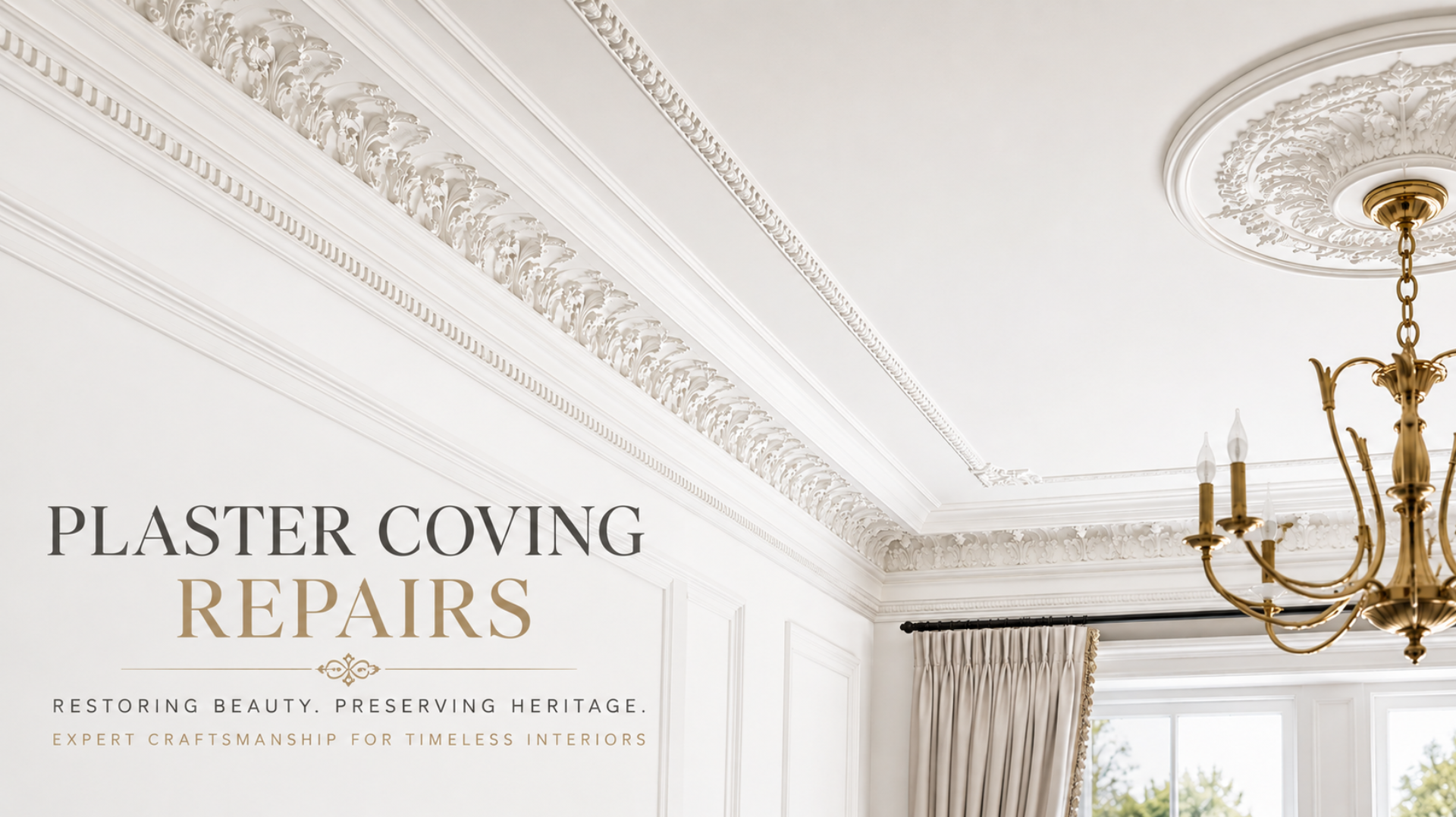
Plaster Coving Repairs Hampshire
Plaster Coving Repairs provides professional plaster coving repair services throughout Hampshire, helping homeowners, landlords, property managers and commercial clients restore damaged, cracked or deteriorating decorative plasterwork.
Coving can make a significant difference to the appearance of a room, creating a refined transition between walls and ceilings while adding character to both traditional and contemporary properties. However, plaster coving can become damaged over time through movement, impact, damp, decorating work or general wear. Rather than replacing an entire length of coving, professional repair can often restore the existing feature while preserving its original appearance.
Our plaster coving repair service in Hampshire is suitable for everything from small cracks and chips to larger areas of missing or damaged plaster. We aim to achieve a neat, seamless finish that blends naturally with the surrounding coving.
Professional Plaster Coving Repairs in Hampshire
Damaged coving can be particularly noticeable once a room has been freshly decorated. Cracks, gaps, dents and missing sections can interrupt otherwise attractive plasterwork and make a property appear poorly maintained.
Plaster Coving Repairs can assess the condition of your existing coving and determine the most appropriate repair method. Depending on the damage, this may involve filling cracks, rebuilding missing sections, repairing joints, replacing small sections or recreating decorative details.
The objective is not simply to cover the damage but to restore the shape, profile and character of the original plasterwork wherever possible.
Repairing Cracked Plaster Coving
Cracks are among the most common problems affecting plaster coving. Some cracks are superficial, while others can develop because of movement between the ceiling and wall or deterioration of the plaster substrate.
Our repair process can include carefully opening and preparing damaged areas, removing loose material, reinforcing or rebuilding the affected section and creating a smooth transition into the existing coving.
Once the repair has been completed and decorated, the aim is for the repaired area to blend discreetly with the surrounding plasterwork.
Plaster Coving Damage and Missing Sections
Coving can become chipped or broken during furniture removal, building work, electrical work, plastering or redecoration. Older properties can also suffer from gradual deterioration that leaves sections of decorative plasterwork weakened or missing.
Where practical, missing areas can be rebuilt to match the existing profile. This can be particularly important when the coving has a traditional or unusual design that is difficult to replace with a modern off-the-shelf product.
Traditional Plaster Coving Restoration
Hampshire contains a wide variety of properties, from older period houses and Victorian terraces to Georgian properties, cottages and modern homes. Decorative plasterwork can contribute considerably to the architectural character of these buildings.
Where original coving remains in reasonable condition, repairing it rather than replacing it can help retain the character of the room. Traditional plaster coving restoration requires attention to proportions, profiles, joins and surface texture so that the repair does not look obviously newer than the surrounding feature.
Plaster Coving Repairs can help restore decorative plasterwork while taking care to preserve as much of the original material as possible.
Coving Joint Repairs
Joints between lengths of coving can become visible over time. Changes in temperature, building movement, previous poor-quality installation and repeated decorating can all contribute to noticeable seams.
Careful joint repair can improve the continuity of the coving. The affected areas can be prepared, filled and shaped before being sanded and finished ready for painting.
A properly repaired joint should follow the existing profile rather than creating a flat or uneven patch.
Repairing Water-Damaged Coving
Water ingress and leaks can cause plaster coving to stain, soften, crack or eventually fall away from the wall or ceiling. If water damage is present, the underlying cause should be addressed before decorative plaster repairs are completed.
Once the source of the moisture has been resolved and the affected area is suitable for repair, damaged plasterwork can be assessed. Loose or unsound material may need to be removed before the coving is repaired or reconstructed.
This approach helps prevent decorative repairs from being compromised by an unresolved moisture problem.
Coving Repairs for Period Properties
Period properties often contain decorative features that are difficult to replicate using standard modern materials. Original coving may have a distinctive profile, ornate detailing or subtle variations that contribute to the property’s character.
Repairing existing plaster coving can therefore be preferable to removing it unnecessarily. Where sections are damaged, careful restoration can help retain the appearance of the original feature.
Whether your property is a period townhouse, Victorian terrace, Georgian home or traditional cottage, professional coving repair can help maintain its decorative character.
Seamless Plaster Coving Repairs
A successful coving repair should not stand out from the original plasterwork. Matching the existing profile and surface finish is therefore an important part of the process.
Our approach focuses on carefully preparing the damaged area, rebuilding or filling where required, shaping the repair and creating a smooth finish. The surrounding coving is treated as the reference point so that the repaired section follows the existing lines and contours.
Plaster Coving Repairs for Homes and Commercial Properties
Plaster Coving Repairs provides repair services for a range of property types across Hampshire.
Our services can be suitable for:
- Private homes
- Period properties
- Victorian and Edwardian houses
- Georgian properties
- Cottages
- Flats and apartments
- Rental properties
- Letting properties
- Hotels and guest houses
- Offices
- Restaurants
- Shops
- Commercial premises
- Property management projects
Every property is different, so the repair method depends on the condition, design and extent of the existing plasterwork.
Why Repair Existing Coving?
Replacing damaged coving is not always necessary. If most of the original feature remains intact, repairing the affected section can be a practical way to preserve the existing decorative plasterwork.
Repairing existing coving can:
- Preserve original architectural features
- Maintain the character of period properties
- Improve the appearance of damaged areas
- Avoid unnecessary removal of sound plasterwork
- Provide a more consistent finish
- Prepare the coving for redecoration
- Restore damaged or missing details
Professional repair is particularly worthwhile when the existing coving has an unusual profile or decorative design.
Plaster Coving Repairs Across Hampshire
Plaster Coving Repairs provides coverage across Hampshire, serving homeowners and property clients in towns, cities and surrounding areas.
Hampshire County Council identifies 23 larger settlements in its townscape assessment programme, including Aldershot and Farnborough, Alton, Andover, Basingstoke, Eastleigh, Fareham, Fleet, Gosport, Havant, Lymington, New Milton, Petersfield, Ringwood, Romsey, Totton, Waterlooville and Winchester, among others.
Areas we cover include:
- Aldershot
- Alton
- Andover
- Basingstoke
- Bishops Waltham
- Blackwater
- Brockenhurst
- Chandler’s Ford
- Cowplain
- Eastleigh
- Emsworth
- Fareham
- Fleet
- Farnborough
- Fordingbridge
- Gosport
- Grayshott
- Hambledon
- Hamble-le-Rice
- Havant
- Hedge End
- Horndean
- Hythe
- Liphook
- Locks Heath
- Lymington
- New Milton
- Petersfield
- Ringwood
- Romsey
- Tadley
- Totton
- Waterlooville
- Whitchurch
- Whiteley
- Wickham
- Winchester
- Yateley
We also cover surrounding villages and smaller communities throughout Hampshire. The county’s local government structure includes areas such as Basingstoke and Deane, East Hampshire, Eastleigh, Fareham, Gosport, Hart, Havant, New Forest, Rushmoor, Test Valley and Winchester.
Plaster Coving Repairs Winchester
Winchester is well known for its historic architecture and period properties. Older homes can contain original plaster mouldings and decorative coving that require specialist attention when damaged.
Plaster Coving Repairs can help repair cracked, chipped or incomplete coving in Winchester properties while aiming to preserve the appearance of the existing plasterwork.
Plaster Coving Repairs Basingstoke
Basingstoke contains a mixture of older properties, traditional homes and modern developments. Damaged coving can occur through building movement, decorating work, accidental impact and general deterioration.
Our plaster coving repair service in Basingstoke can restore damaged sections and prepare existing coving for painting and redecoration.
Plaster Coving Repairs Andover
From traditional properties to modern homes, plaster coving can add an attractive finishing detail to ceilings throughout Andover.
Where coving has developed cracks, chips or gaps, professional repair can help restore the feature without automatically requiring complete replacement.
Plaster Coving Repairs Southampton
Southampton has a broad range of residential and commercial properties, including older houses where decorative plasterwork forms an important part of the interior.
Plaster Coving Repairs can assist with repairing damaged decorative coving in Southampton and surrounding areas.
Plaster Coving Repairs Fareham
Damaged coving can detract from an otherwise well-presented property. Our repair service in Fareham is designed to address common problems such as cracks, damaged corners, open joints and missing sections.
Plaster Coving Repairs Eastleigh
Whether you have a small damaged area or more extensive deterioration, our plaster coving repair service in Eastleigh can help restore the appearance of existing decorative plasterwork.
Plaster Coving Repairs New Forest
Traditional properties across the New Forest area can contain attractive plaster features that benefit from sympathetic repair. Where original coving can be retained, restoration may help preserve the character of the room.
The Plaster Coving Repair Process
The repair process will depend on the condition of the coving and the extent of the damage.
A typical project may involve:
- Inspecting the existing plaster coving.
- Identifying cracks, loose sections and damaged areas.
- Removing unsound material where necessary.
- Preparing the damaged section for repair.
- Rebuilding, filling or recreating the affected area.
- Shaping the repair to follow the existing profile.
- Smoothing and finishing the repaired plasterwork.
- Preparing the area for painting or further decoration.
Careful preparation is essential because even a relatively small imperfection can become noticeable once the surrounding wall and ceiling have been painted.
When Should Plaster Coving Be Repaired?
It is generally sensible to address damage before it becomes more extensive. Small cracks can become larger, loose sections can deteriorate further and water-damaged plaster can become unstable.
You may wish to arrange a professional assessment if your coving has:
- New or expanding cracks
- Visible gaps at joints
- Loose sections
- Chipped corners
- Missing pieces
- Water staining
- Crumbling plaster
- Uneven surfaces
- Previous poor-quality repairs
- Damage caused during decorating or building work
Plaster Coving Repairs Before Decorating
Repairing coving before painting can make a substantial difference to the final appearance of a room. Painting over cracks or poorly repaired areas can make imperfections more obvious rather than hiding them.
For this reason, damaged decorative plasterwork should ideally be assessed and repaired before the final decorating stage.
Once the plaster repair has properly cured and been prepared, the surrounding area can be decorated to create a consistent finish.
Why Choose Plaster Coving Repairs?
Plaster Coving Repairs focuses specifically on the repair and restoration of decorative plaster coving. This specialist approach allows attention to be given to the profile, condition and existing character of the plasterwork.
Whether you require a small repair or need several damaged areas restored, the aim is to provide a professional finish that complements the existing interior.
Frequently Asked Questions
How much does plaster coving repair cost in Hampshire?
The cost depends on the extent of the damage, the length of coving involved, the profile of the existing plasterwork and whether sections need to be rebuilt or recreated. An assessment is normally required before an accurate price can be provided.
Can cracked plaster coving be repaired?
Yes. Many cracks in plaster coving can be repaired, provided the underlying plasterwork is suitable for restoration. The damaged area can be prepared, repaired and finished to blend with the surrounding coving.
Can missing sections of coving be recreated?
In many cases, missing sections can be rebuilt or reproduced to match the existing profile. The complexity of the design and the amount of missing material will determine the most suitable approach.
Is it better to repair or replace plaster coving?
If the existing coving is largely sound, repairing it can be preferable to removing an original decorative feature. This is particularly relevant to period properties where the existing profile may be difficult to match with modern products.
Can you repair old plaster coving?
Yes. Older plaster coving can often be repaired where the existing material is sufficiently sound. Particular care may be required when working with ornate or historically important decorative plasterwork.
Can water-damaged coving be repaired?
Water-damaged coving can often be repaired once the source of the moisture has been resolved. Loose or severely damaged plaster may need to be removed before the decorative feature can be restored.
Do you repair coving joints?
Yes. Open or visible joints can often be repaired and refinished so that the transition between adjoining lengths of coving is less noticeable.
Can damaged coving be repaired before painting?
Yes. Repairing coving before final decoration is usually preferable because cracks, chips and uneven areas can be properly addressed before paint is applied.
Do you provide plaster coving repairs throughout Hampshire?
Yes. Plaster Coving Repairs provides services across Hampshire, including Winchester, Basingstoke, Andover, Southampton, Portsmouth, Fareham, Eastleigh, Havant, Gosport, Aldershot, Farnborough, Fleet, Petersfield, Alton, Romsey, Ringwood, Lymington, New Milton, Waterlooville and surrounding areas.
Can small areas of damaged coving be repaired?
Yes. Small chips, cracks, holes and damaged sections can often be repaired without replacing the entire length of coving. The appropriate method depends on the condition of the existing plaster.
How can I arrange plaster coving repairs in Hampshire?
Contact Plaster Coving Repairs to discuss the condition of your plaster coving and the work required. Providing photographs of the damaged areas can also help establish the likely scope of the repair before an assessment is arranged.
Professional Plaster Coving Repairs Hampshire
Damaged decorative plasterwork does not always need to be removed and replaced. With the right repair approach, existing coving can often be restored while retaining the character and appearance of the original feature.
Plaster Coving Repairs provides professional plaster coving repairs throughout Hampshire for residential and commercial properties. From small cracks and damaged joints to missing sections and more extensive deterioration, we can help restore your existing plaster coving and prepare it for a high-quality decorative finish.