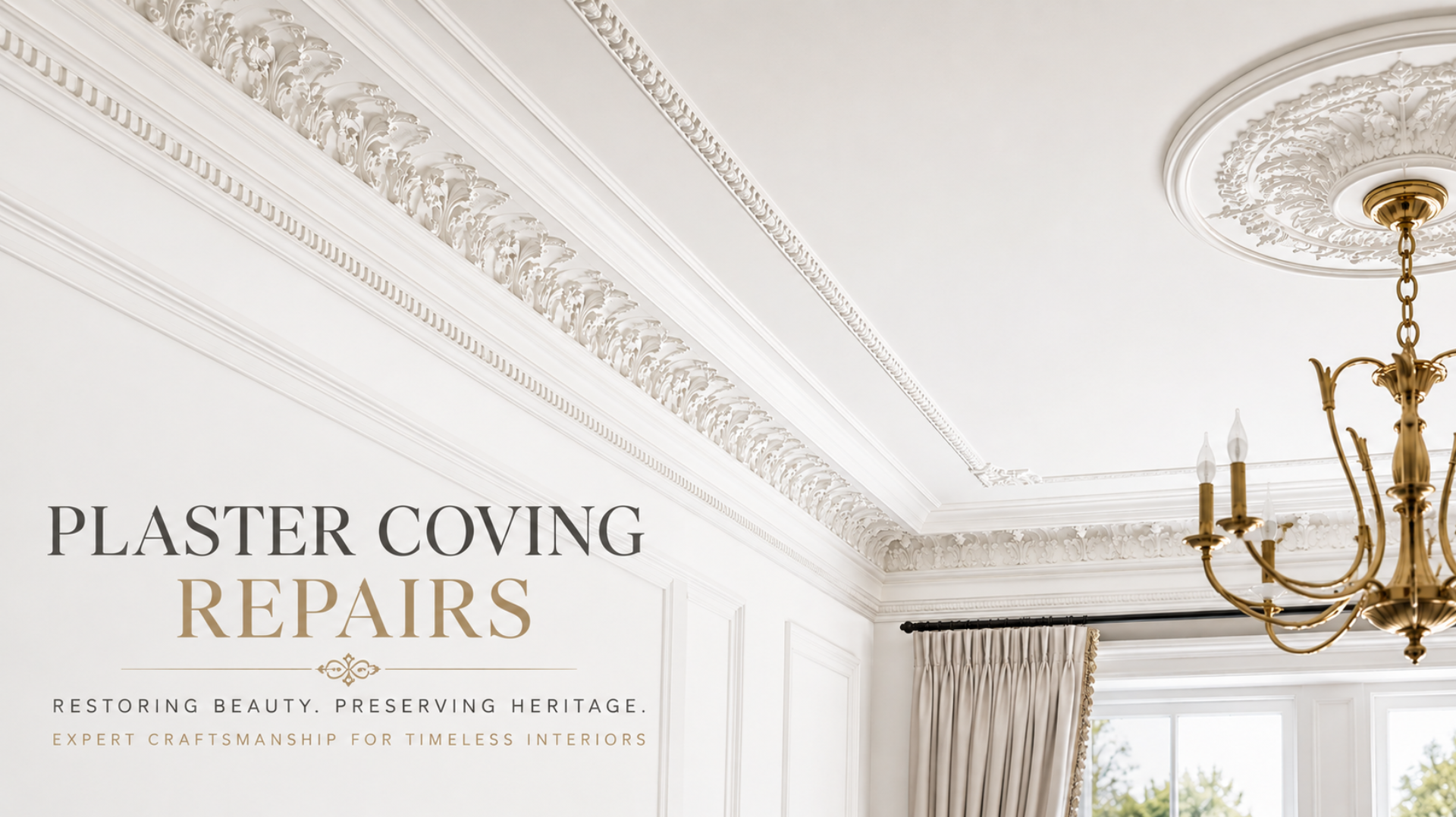
Plaster Coving Repairs Merseyside
Plaster coving is an important architectural feature that can add character, elegance and definition to almost any interior. From traditional Victorian terraces and Edwardian homes to Georgian properties, period apartments and modern houses, decorative plaster coving can transform the appearance of a room.
When plaster coving becomes cracked, chipped, loose or damaged, a professional repair is often preferable to removing and replacing the entire feature. Plaster Coving Repairs provides specialist plaster coving repairs throughout Merseyside, helping homeowners, landlords, property developers and commercial clients preserve and restore decorative plasterwork.
Our approach focuses on careful repair, accurate profile matching and a high-quality finish. Where sections are missing or beyond economical repair, we can recreate the original design to achieve a consistent appearance.
Professional Plaster Coving Repairs in Merseyside
Damaged coving can occur for many reasons. Age, building movement, moisture, accidental impact, ceiling repairs and previous renovation work can all affect decorative plasterwork. Even relatively small cracks or gaps can become more noticeable over time.
Professional plaster coving repairs can restore both the appearance and integrity of the feature without unnecessarily removing original material. We assess the condition of the existing coving before recommending the most appropriate repair method.
Our work can include:
- Repairing cracked plaster coving
- Repairing chipped or broken coving
- Restoring loose or detached sections
- Rebuilding damaged corners
- Recreating missing sections
- Repairing decorative plaster mouldings
- Matching existing coving profiles
- Restoring period plaster coving
- Repairing mitres and joints
- Making good around damaged ceiling areas
- Reproducing ornamental plaster details
- Preparing repaired coving for decoration
Every repair is approached individually because plaster profiles, construction methods and levels of deterioration can vary considerably from one property to another.
Plaster Coving Restoration for Period Properties
Merseyside has a wide variety of traditional and period housing, particularly across Liverpool and surrounding areas. Older properties can feature ornate cornices, decorative coving, ceiling roses, friezes and other plaster mouldings that contribute significantly to their character.
Removing original plasterwork simply because it has suffered some damage can result in the loss of an important architectural feature. In many cases, careful restoration is a better solution.
Our aim is to retain as much of the existing plasterwork as possible while repairing damaged areas sensitively. Where a section is missing, the surrounding profile can provide a reference for creating a suitable replacement.
This approach is particularly valuable when working on period homes where maintaining the original appearance is important.
Matching Existing Plaster Coving
One of the most important aspects of a successful coving repair is achieving an accurate match.
Older properties can contain unusual plaster profiles that are no longer readily available from standard manufacturers. Replacing one damaged section with a generic modern profile can leave an obvious difference between the original and new work.
Plaster Coving Repairs can work with existing designs to reproduce missing or damaged sections as closely as possible. The profile, dimensions, curves and decorative details are considered when determining the appropriate repair method.
The objective is to create a repair that integrates naturally with the surrounding plasterwork rather than appearing as an obvious replacement.
Repairing Cracked Plaster Coving
Cracks are among the most common problems affecting plaster coving. They can range from fine surface cracks to larger breaks where sections have become unstable.
The cause of the cracking should be considered before simply filling the surface. Building movement, changes in the ceiling or wall, moisture and previous repair work can all contribute to recurring damage.
Depending on the condition of the coving, repairs may involve securing loose areas, carefully removing unsound material, rebuilding damaged sections and making good the surface.
Once completed, the repaired area can be prepared for painting so that it blends with the surrounding coving.
Loose or Detached Coving Repairs
Plaster coving can occasionally become loose where its original fixings or adhesive have deteriorated. This may cause gaps between the coving and ceiling or wall, movement when touched, or sections beginning to pull away from the surface.
Loose coving should not simply be covered with filler or paint. If the underlying section is unstable, further movement can cause additional cracking or even collapse.
We can assess loose plaster coving and determine the appropriate method of stabilising and repairing it. Where possible, existing material is retained rather than unnecessarily replaced.
Recreating Missing Plaster Coving
In some Merseyside properties, sections of original coving may have been removed during previous renovations or damaged beyond repair.
A missing section does not necessarily mean that the whole length needs to be replaced.
Where sufficient original detail remains, a replacement can be created to complement the existing profile. This can be particularly useful when repairing chimney breast areas, corners, alcoves, door openings and sections affected by previous electrical or building work.
Accurate reproduction helps maintain continuity throughout the room.
Plaster Coving Corner Repairs
Corners can be particularly vulnerable to damage. Furniture movement, decorating work and building alterations can result in chipped or broken coving around internal and external corners.
A poor corner repair can be very noticeable because even a small difference in angle or profile can affect the appearance of the entire length.
We take care when rebuilding damaged corners and joining repaired sections to existing plasterwork. The finished repair is prepared to provide a clean transition ready for painting.
Water-Damaged Plaster Coving
Water ingress and leaks can cause serious damage to decorative plasterwork. Roof problems, plumbing leaks, condensation and other sources of moisture may result in staining, soft plaster, cracking or sections becoming detached.
Where water has affected coving, the underlying source should be addressed before permanent restoration work is undertaken.
Once the area is dry and stable, damaged plasterwork can be assessed to determine whether it can be repaired or whether affected sections need to be carefully replaced.
Traditional Plaster Coving Repairs
Traditional plasterwork requires a different approach from simply fitting lightweight decorative trim. Many older buildings contain original plaster mouldings that were created specifically for the property.
Using inappropriate materials or techniques can result in visible differences in texture, profile and performance.
Plaster Coving Repairs takes the age, construction and condition of the property into account when planning restoration work. Where appropriate, traditional methods and compatible plaster materials can be considered to help maintain the character of older interiors.
Plaster Coving Repairs for Listed and Heritage Properties
Historic and listed properties require particular care when decorative plasterwork is being repaired. Original coving may form part of the architectural character of the building and should be treated sensitively.
Where heritage plasterwork is involved, the priority should generally be to retain original material wherever practical and use appropriate techniques for any necessary repairs or reproduction.
Professional restoration can help preserve the appearance of important decorative features while avoiding unnecessary loss of original fabric.
Plaster Coving Repairs for Homes and Businesses
Our plaster coving repair service is suitable for a wide range of properties throughout Merseyside.
We work with:
- Homeowners
- Landlords
- Property investors
- Property developers
- Interior designers
- Building contractors
- Commercial property owners
- Offices
- Hotels
- Restaurants
- Period and heritage properties
Whether you require a small repair in one room or extensive restoration throughout a property, the work can be tailored to the condition and requirements of the existing plasterwork.
Why Repair Plaster Coving Rather Than Replace It?
Replacing damaged coving is not always the best option. Original plasterwork can have a unique profile that may be difficult to source, particularly in older properties.
Repairing existing coving can offer several advantages:
- Preserves original architectural features
- Maintains the character of period properties
- Avoids unnecessary removal of sound plasterwork
- Allows unusual profiles to be retained
- Creates a more authentic finish
- Can be suitable for individual damaged areas
- Helps maintain consistency throughout a room
Where replacement is necessary, careful reproduction can provide a practical alternative to removing all of the original coving.
Areas We Cover Across Merseyside
Plaster Coving Repairs provides services throughout Merseyside and its principal towns, cities and communities.
Areas covered include:
- Liverpool
- Birkenhead
- Bootle
- Crosby
- Formby
- Huyton
- Kirkby
- Maghull
- Prescot
- St Helens
- Southport
- Wallasey
- Bebington
- Hoylake
- West Kirby
- Heswall
- Neston
- Newton-le-Willows
- Rainhill
- Whiston
- Eccleston
- Haydock
- Rainford
- Billinge
- Thatto Heath
- St Helens
- Ormskirk
- Skelmersdale
We also cover surrounding villages, suburbs and residential areas throughout Merseyside.
Plaster Coving Repairs Liverpool
Liverpool contains a substantial collection of traditional properties where decorative plasterwork forms an important part of the interior character. Victorian and Edwardian homes can feature ornate coving, cornices and other plaster mouldings.
Our plaster coving repair service in Liverpool is suitable for everything from small cracks and damaged corners to missing decorative sections and more extensive restoration work.
We aim to preserve the original appearance wherever possible, with careful attention to the existing profile and surrounding finishes.
Plaster Coving Repairs Wirral
Properties throughout the Wirral can also benefit from specialist plaster coving restoration. From Birkenhead and Wallasey to Bebington, Heswall, Hoylake and West Kirby, many homes feature traditional decorative plasterwork.
Whether coving has been damaged during renovation work or deteriorated naturally over time, professional restoration can help return the feature to an attractive and secure condition.
Plaster Coving Repairs St Helens
St Helens and surrounding areas contain a mixture of traditional and modern properties. Damaged coving can detract from an otherwise well-presented interior.
We can repair cracks, damaged corners, loose sections and missing plasterwork while working to achieve a consistent finish with the existing coving.
Plaster Coving Repairs Southport
Southport is known for its attractive period properties, traditional terraces and larger residential homes, many of which contain decorative interior features.
Our plaster coving repair service can help homeowners preserve these features rather than replacing them with unsuitable modern alternatives.
A Careful Approach to Every Repair
Successful plaster coving restoration depends on more than filling cracks and applying paint. The shape, profile, condition and relationship between the coving, wall and ceiling all need to be considered.
Our approach is centred on careful preparation and attention to detail. We identify damaged areas, determine what can be retained and select a suitable repair or reproduction method.
The final stage involves making the repaired area ready for decoration, helping the restored section blend naturally into the surrounding interior.
Contact Plaster Coving Repairs
If your plaster coving is cracked, damaged, loose or missing, Plaster Coving Repairs can provide a professional solution throughout Merseyside.
Whether you own a Victorian terrace in Liverpool, a period property on the Wirral, a traditional home in Southport or a modern property requiring decorative plaster repairs, we can assess the condition of your coving and recommend an appropriate way forward.
Contact Plaster Coving Repairs to discuss your requirements and arrange a professional assessment.
Frequently Asked Questions About Plaster Coving Repairs in Merseyside
Can cracked plaster coving be repaired?
Yes. Many cracks in plaster coving can be repaired without replacing the complete length. The appropriate repair depends on the depth and extent of the damage and whether the coving has remained securely attached.
Can badly damaged plaster coving be restored?
In many cases, yes. Damaged areas can potentially be rebuilt or reproduced using the remaining coving as a reference. The extent of restoration required depends on how much of the original profile remains.
Can you match old plaster coving?
Yes. Existing plaster coving can be assessed to determine its profile, dimensions and decorative characteristics. Replacement sections can then be created to complement the original design as closely as practical.
Should I repair or replace my plaster coving?
Repair is often preferable when the majority of the original coving remains sound. However, severely deteriorated or missing sections may require reproduction or replacement. An assessment can establish the most suitable option.
Can loose plaster coving be repaired?
Loose coving can often be stabilised and repaired, provided the surrounding plaster and fixing surface are suitable. Leaving loose sections untreated may allow the damage to become more extensive.
Can you repair plaster coving in Victorian properties?
Yes. Specialist restoration is particularly useful in Victorian properties where original decorative plasterwork contributes to the character of the building.
Do you repair plaster coving after water damage?
Yes, provided the source of the moisture has been resolved and the plasterwork is sufficiently dry and stable. Severely deteriorated sections may require partial reconstruction or replacement.
Can you repair coving around corners?
Yes. Damaged internal and external corners can be carefully repaired or reconstructed to match the existing profile.
Do plaster coving repairs leave visible marks?
The aim of professional repair is to make the restored section blend with the existing plasterwork. Careful preparation, profile matching and finishing can significantly reduce the visibility of the repair.
Do you cover the whole of Merseyside?
Plaster Coving Repairs provides services across Merseyside, including Liverpool, Wirral, St Helens, Sefton and surrounding towns, villages and residential areas.
How long does plaster coving repair take?
The timescale depends on the extent of the damage, the length of coving involved, the complexity of the profile and whether sections need to be reproduced. Smaller repairs can be relatively straightforward, while extensive restoration requires more time.
Is plaster coving worth repairing?
For many properties, particularly period homes, repairing original coving can be worthwhile because it preserves an important decorative feature. It can also provide a more authentic result than replacing traditional plasterwork with a generic profile.
Can you repair decorative plaster mouldings as well as coving?
Yes. Depending on the project, specialist decorative plaster repair can include cornices, ornamental mouldings, corners and other decorative plaster features.
Why choose Plaster Coving Repairs in Merseyside?
Plaster Coving Repairs focuses on careful workmanship, accurate matching and the preservation of decorative plaster features. Every project is assessed individually so that the repair method is appropriate for the existing coving and the property.
If your plaster coving needs attention, professional restoration can help preserve its appearance and prevent minor damage from becoming a much larger problem.